 |
| Montana Historical Society Photograph Archives, 943-498 |
Showing posts with label books. Show all posts
Showing posts with label books. Show all posts
Monday, August 11, 2014
Frank Linderman
Sixteen-year-old Frank Linderman left Chicago for the Flathead Valley wilderness in 1885. He became a friend to the Indians and viewed encroaching civilization firsthand. Linderman’s passionate desire was to preserve the old West, especially Montana, in printer’s ink. Linderman did it all. He was a trapper, trader, assayer, newspaperman, businessman, insurance agent, and state legislator. He was an advocate of Indian causes.
Through his efforts, along with Charlie Russell and other friends, Congress created the Rocky Boy’s Reservation for landless members of several Chippewa and Cree bands. Native American leaders respected Linderman’s active support, and through “sign talk,” he shared their histories, customs, and stories. From 1898 to 1905, Linderman edited the Sheridan Chinook in a building that Charles Bovey later rescued and placed at Nevada City. In 1917, Linderman built a cabin in Lake County where he authored many books, stories, and articles, among them the highly acclaimed biography of the Crow chief, Plenty Coups. His accurate portrayals led Plenty Coups to conclude, “I am glad I have told you these things, Sign Talker. You have felt my heart, and I have felt yours.” Frank Linderman is one of the treasures of the Treasure State.

Wednesday, June 25, 2014
15,000 Miles by Stage
Update: I originally titled this post "10,000 Miles by Stage" by mistake. The actual title of Carrie Strahorn's book is 15,000 Miles by Stage.
Carrie Strahorn wrote a wonderful book—still in print—about stagecoach travel in the West called10,000 15,000 Miles by Stage. She and her husband Robert were newly married in 1878 when they traveled through Montana and other western states. Mrs. Strahorn’s astute observations about the characters they encountered, stage stops, hotels, and scenery are very entertaining.
The Strahorns stayed at the Cosmopolitan Hotel in Helena. The desk clerk gave them a room key, but they were astonished to discover that no one expected them to lock their door. Mrs. Strahorn writes that they encountered no tramps, no beggars, and no burglars. Unlike other towns along the railway routes where there was crime and poverty, Helena, although isolated, had none of that. Although citizens could not wait for rail service, “It seemed a pity,” Mrs. Strahorn writes, “to propose a railroad to such a happy community.” Among the characters she describes are two memorable women she encountered in the hotel dining room. They were angular in figure, tall, slim, with long features. Each had tried to outdo the other with tiny, elaborate spit curls from the center parts of their foreheads to their earlobes, and they were so prim and precise that they almost appeared to be machines.
Mrs. Strahorn goes on the say that that there were so few women out west that military men begged their friends to send for sisters, cousins, and aunts. Sometimes, Mrs. Strahorn writes, they were weird specimens of the fairer sex like the two at the Cosmopolitan, but even they in their minority could reign as queens. They could dance, ride, and flirt to their hearts’ content and marry, too. The success of such women diminished as the population grew and single men had more choices. But in the 1870s, the frontier was a fact and not a fiction. A woman in the Far West was a blessing sent direct from Heaven, or from the East, which was much the same thing in those days.
Carrie Strahorn wrote a wonderful book—still in print—about stagecoach travel in the West called
 |
| Carrie Strahorn is the author of Photo courtesy Idaho Historical Society. |
 |
| The Cosmopolitan Hotel in Helena was one of the best in the region. The Helena Board of Trade published this sketch of the lobby in 1887. Montana Historical Society Research Center. |
Wednesday, April 23, 2014
Wendigo
Does anyone remember that very scary 1961 episode of Great Ghost Stories retelling novelist Algernon Blackwood’s powerful 1910 short story "The Wendigo?" The final scene shows the mythical creature, in the body of a starving human, doomed to roam the cold, snow scattered forests of the north, picking at the bark of a tree for nourishment. Others, including Theodore Roosevelt in his book The Wilderness Hunter and Stephen King in Pet Sematary, have written stories of wendigos.
The mythical wendigo is said to roam the northern regions from the Atlantic Ocean to the Rocky Mountains and as far north as the Arctic Ocean, hungry for human flesh, but also feeding on moss, frogs, and mushrooms. Most northern Native American tribes have stories explaining how a human can turn “wendigo” by an act of cannibalism, through the presence of a demon, through a dream, or by the sorcery of a shaman. In times of starvation, the wendigo myth served as a deterrent to cannibalism, even to save one’s life. Suicide or resignation to death was preferable to turning wendigo. Among the Assiniboine and Cree, a wendigo ceremony was performed in times of famine to reinforce this taboo. Anthropologists have studied a phenomenon called “Wendigo psychosis.” There are historical cases of this condition which apparently resulted when a person resorted to cannibalism and then developed an insatiable taste for human flesh. A famous documented case involved Swift Runner, a Plains Cree trapper in Alberta, who butchered and ate his wife and five children, even though the starving family was within twenty-five miles of food at a Hudson’s Bay post. Swift Runner, suffering from this psychosis, became a homicidal cannibal, later confessed and was executed at Fort Saskatchewan in 1878.
 |
| Illustration by Matt Fox in "The Wendigo" by Algernon Blackwood in Famous Fantastic Mysteries, June 1944. |
Monday, September 23, 2013
Andrew Garcia
One of Montana’s most colorful characters was Andrew Garcia whose book, Tough Trip Through Paradise, is considered a premier historical adventure story tracing his youthful travels in the late 1870s. Andrew was just twelve in 1868 when he first came to Montana from Texas. He tagged along with his uncle Albino Ortez and some cowboys driving three hundred working mules to Gallatin City. Garcia’s uncle had begged the youngster’s parents to let him accompany the men. They never really gave permission, and Garcia later claimed that he was practically kidnapped. They did not return to Texas for two years. In 1876, twenty-year-old Garcia returned to Montana.
Tough Trip Through Paradise traces Garcia’s adventures from 1878 to 1879. During this short period, he met, married, and buried his first wife, In-who-lise, a Nez Perce woman who was killed by the Blackfeet. Years later in 1899, Garcia married Barbara Voll. They raised four sons on their remote Mineral County ranch. Barbara didn’t want to hear of his earlier life, so Garcia wrote at night, after working hard all day, and hid the papers. In 1931 he wrote that Hell would be popping in the Garcia family when In-who-lise appeared in print. His children and later, grandchildren, sometimes snuck the manuscript and read some of it. They would suffer beatings if they got caught because the language was very coarse and the subject matter unsuitable for children. Garcia died in 1943 at age eighty-seven, but his writings lay hidden until 1960 when a disapproving daughter-in-law, offended by the story, pushed for its sale. Ben Stein took on the project and published Tough Trip Through Paradise in 1967.
 |
| Montana Historical Society Photograph Archives, 942-340 |
Monday, July 29, 2013
Thomas Dimsdale’s School
Health was among the many reasons that people came west to the booming gold camps. They believed that the high mountain climate could cure tuberculosis, but they did not realize that primitive living conditions and brutal winters could neutralize healthful benefits. Thomas Dimsdale was one of those pioneers afflicted with tuberculosis who came west for the mountain climate. He opened a private school in the winter of 1863-1864. Students paid two dollars a week to attend classes in this tiny cabin, which stood on Cover Street in Virginia City.
Later, as editor of the territory’s first newspaper, the Montana Post, Dimsdale wrote an account of the vigilantes in installments for the newspaper. It became Montana’s first published book, The Vigilantes of Montana, and is still in print. Mary Ronan was a student of Dimsdale's, and she later recalled in Girl from the Gulches, “Professor Dimsdale was an Englishman, small, delicate looking, and gentle. I liked him. It seemed to me that he knew everything. In his school all was harmonious and pleasant. While his few pupils buzzed and whispered over their assignments, the professor sat at a makeshift desk writing, writing, always writing. When, during 1864, The Vigilantes of Montana was being published at the Montana Post, I thought it must have been the composition of those articles that had so engrossed him. We children took advantage of Professor Dimsdale’s preoccupation and would frequently ask to be excused. We would run down the slope into a corral at the bottom of Daylight Gulch. We would spend a few thrillful moments sliding down the straw stacks.” Dimsdale was appointed the first territorial superintendent of schools in 1866, but he died soon after from the tuberculosis that brought him west. The tiny cabin, in ruins in a Virginia City back yard, was moved out of harm’s way to Nevada City in 1976.
 |
| Thomas Dimsdale. Courtesy Yanoun.org |
 |
| The Dimsdale School in its present location in Nevada City |
Friday, July 12, 2013
Friday Photo: The Bookmobile Comes to Fairfield
 |
| Montana Historical Society Photograph Archives, PAc 89-38 F5 |
Friday, September 28, 2012
Friday Photo: Duck Hunting
Duck hunting season opens this weekend, so this photo seems timely.
This circa 1914 photo is simply titled "Duck Hunting on the Hi Line."
Bonus: Here's a recipe for duck from The Progressive Cook Book published by the Billings First United Methodist Church in 1893. It was written by Juliet Corson.
Roast Duck with Apples
Pluck and singe a duck, draw it, wipe with a wet towel and lay in a baking pan; wipe a dozen small sour apples with a wet cloth, cut the cores out and arrange around the duck. Put pan into the oven and quickly brown the duck; then moderate the heat of the oven and continue cooking until the apples are tender; baste both every five minutes until done, then serve both on the same dish.
Enjoy!
 |
| Montana Historical Society Photograph Archives, 948-572 |
Bonus: Here's a recipe for duck from The Progressive Cook Book published by the Billings First United Methodist Church in 1893. It was written by Juliet Corson.
Roast Duck with Apples
Pluck and singe a duck, draw it, wipe with a wet towel and lay in a baking pan; wipe a dozen small sour apples with a wet cloth, cut the cores out and arrange around the duck. Put pan into the oven and quickly brown the duck; then moderate the heat of the oven and continue cooking until the apples are tender; baste both every five minutes until done, then serve both on the same dish.
Enjoy!
Monday, August 27, 2012
Evelyn Cameron
Today's post remembers Evelyn Cameron. She was born on August 26, 1868.
Terry, Montana, on the state’s eastern edge, was home to Evelyn Cameron, a talented woman who documented the homesteading era and Montana outdoors with shutter, lens, and expert eye. Cameron’s photographs capture the spirit of the West just as surely as Charlie Russell’s famous paintings define Montana cowboys. Cameron came to Montana from England with her husband to raise polo ponies to ship back to the British Isles. Although that idea failed, Cameron learned the art of photography and set about capturing life on the eastern plains. She died in 1928, but years later in the late 1970s, Time-Life books editor Donna Lucey stumbled upon 1,800 photo negatives and 2,700 original prints, stored for half a century in the Terry basement of Janet Williams, Cameron’s best friend. Lucey studied Cameron’s meticulous diaries and photographs to research her book, Photographing Montana 1894–1928: The Life and Works of Evelyn Cameron. Published in 2000, it revealed many of Cameron’s photos for the first time. If you visit Terry, be sure to stop at the Prairie County Museum and visit the Cameron ranch site.
From Montana Moments: History on the Go
P.S. Remember the scandal Cameron created when she rode into Miles City wearing this skirt?
Terry, Montana, on the state’s eastern edge, was home to Evelyn Cameron, a talented woman who documented the homesteading era and Montana outdoors with shutter, lens, and expert eye. Cameron’s photographs capture the spirit of the West just as surely as Charlie Russell’s famous paintings define Montana cowboys. Cameron came to Montana from England with her husband to raise polo ponies to ship back to the British Isles. Although that idea failed, Cameron learned the art of photography and set about capturing life on the eastern plains. She died in 1928, but years later in the late 1970s, Time-Life books editor Donna Lucey stumbled upon 1,800 photo negatives and 2,700 original prints, stored for half a century in the Terry basement of Janet Williams, Cameron’s best friend. Lucey studied Cameron’s meticulous diaries and photographs to research her book, Photographing Montana 1894–1928: The Life and Works of Evelyn Cameron. Published in 2000, it revealed many of Cameron’s photos for the first time. If you visit Terry, be sure to stop at the Prairie County Museum and visit the Cameron ranch site.
 |
| Cameron snapped this photo of her brother Alec Flower with a magnificent cabbage harvest in 1898. Montana Historical Society Photograph Archives PAc 90-87 |
 |
| Dick Brown poses next to a pile of wolf hides in this Cameron photo. Montana Historical Society Photograph Archives PAc 90-87.24-5 |
 |
| Cameron kneads dough in this 1904 self-portrait. Montana Historical Society Photograph Archives PAc 90-87.35-5 |
From Montana Moments: History on the Go
P.S. Remember the scandal Cameron created when she rode into Miles City wearing this skirt?
Wednesday, July 18, 2012
Prairie Figs
Johnny Grant, founder of the Grant-Kohrs Ranch, was the son of the factor at the Hudson’s Bay Company fort near Pocatello, Idaho. Johnny’s memoirs, wonderfully edited by Lyndle Meikle under the title Very Close to Trouble, are full of interesting historical anecdotes. One memorable footnote recounts the story of a green Missourian who came into the fort store. Johnny’s father decided to have some sport with the unsuspecting traveler. Castorums are beaver glands that trappers used as bait. There were a number of these foul objects hanging in the store. The Missourian asked what they were. “Prairie figs,” replied the elder Grant. “Are they good to eat?” asked the Missourian. “For those who like them,” answered Grant. “Can I taste one?” Grant answered, “Certainly.” The traveler picked a good full one and bit into it. The putrid gum and oil ran down the sides of his mouth, and Johnny recalled how comical it was to see the man making faces trying to spit it out. For some time he couldn’t speak. Finally he said, “They might be good for those who like them, but I declare I do not.” This comical story and the singular name suggests that Prairie Figs would make a terrific name for a modern-day band!
From Montana Moments: History on the Go
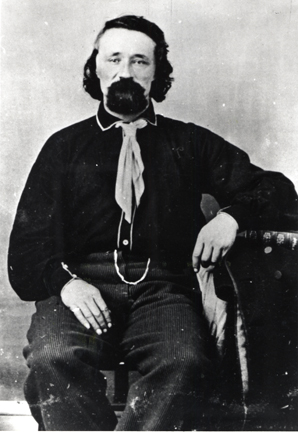 |
| Johnny Grant posed for this photo sometime after founding the Grant-Kohrs Ranch. Montana Historical Society Photograph Archives, 942-461 |
From Montana Moments: History on the Go
Wednesday, July 11, 2012
Paul Maclean’s Unsolved Murder
Norman Maclean’s novella, A River Runs Through It, has an interesting back story. As youngsters, Norman and his brother Paul lived in Helena and Missoula where their father was a Presbyterian minister.
The brothers were fighters and daredevils, and some still remember their antics. Paul later worked for the Helena and Great Falls newspapers, earning a fine reputation as House reporter during the 1930s legislative sessions. In 1938, Norman was teaching at the University of Chicago, and Paul had almost completed his masters degree in English there. In the wee hours of May 3, 1938, Paul was beaten to death in a back alley. Terry Dwyer of the Great Falls Tribune worked with Paul and knew him as a good reporter, but also as a man who would never back down from a fight. Many believed Paul’s murder was mob related—that he owed money, or knew something for which he needed silencing. But the murder was never solved, and Norman had to come to terms with his brother’s death. After he retired from teaching Shakespeare, Norman, at the age of seventy, took up writing. He cast his wild brother as that artistically perfect, but flawed, fly fisherman in A River Runs Through It. As Norman wrote the novella so many years later, he confronted demons of the past, discussing his brother’s death publicly for the first time. Norman’s daughter, Jean Maclean Snyder, told the Livingston Enterprise that her father believed you come to terms with something by understanding it. Norman finally reconciled Paul’s senseless death through his writing. “All good things,” he wrote, “come by grace and grace comes by art and art does not come easy.”
From More Montana Moments
P.S. Remember this unsolved mystery?
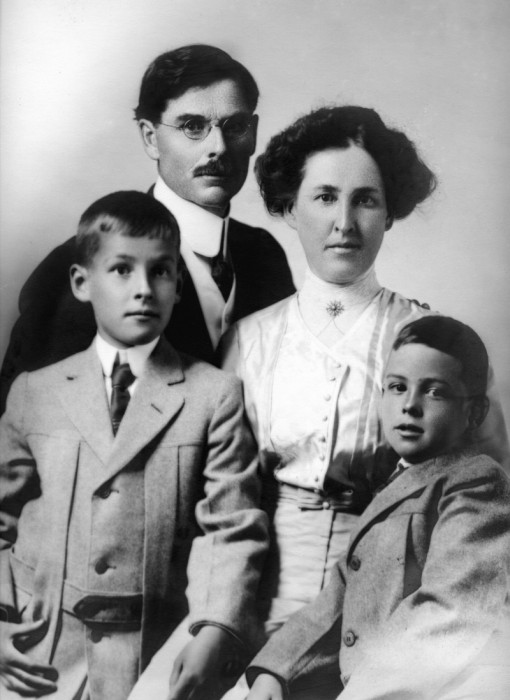 |
| From The Norman Maclean Reader, University of Chicago Press |
From More Montana Moments
P.S. Remember this unsolved mystery?
Tuesday, April 3, 2012
Extra! Extra! The Story of Mary Ronan
I have exciting news, history buffs! As of this morning, you can download Girl from the Gulches: The Story of Mary Ronan as an eBook. (Update: Kindle users can get the book here.) Mary Ronan grew up in the early Montana gold camps. In 1865, her father moved the family from Virginia City to Helena. They settled into a cabin on Clore Street (now Park Avenue), just up the block from the Pioneer Cabin. In this excerpt from the book, Mary remembers going to school in Helena.
 Professor Stone and his brother opened a private school in August 1867, on Academy Hill not far above the first little Catholic Church where the Cathedral of the Sacred Heart was later built. At one end of the long room Professor Stone taught the primary grades. We sat in prim rows on long, rough benches. This was the largest and most interesting school I had ever attended. Professor Stone began a Latin class and I was a member. This gave me a feeling of great importance; I felt I was standing on the edge of real intellectual achievement! Most stimulating was the lesson each day in Webster's school dictionary, with strange sounding words to spell and define. Before school closed each afternoon the older students would pronounce words; we would each in turn rise, repeat the word, spell it, and sit down. Sallie Davenport always spelled down the school. One day Professor Stone's brother was conducting this drill. It was Raleigh Wilkinson's turn. Raleigh was the son of E. S. Wilkinson, Peter Ronan's partner in the Rocky Mountain Gazette. He misspelled the word.
"Try it again, Raleigh," said Mr. Stone.
"I don't think I can spell it," Raleigh replied.
"Well, try it," insisted Mr. Stone.
"I told you I don't think I can spell it," growled Raleigh.
Mr. Stone, himself young, large, and athletic looking, flushed angrily and repeated his command. "Well, try it, I tell you." Raleigh repeated his refusal. For several times more command and refusal were bandied back and forth in rising crescendo until a tempestuous climax came in an exchange of blows. Suddenly up jumped all the big boys and precipitated a melee. We girls fled from the schoolhouse to our homes. This free-for-all fight was the occasion of much talk among the patrons of the school for many days.
Professor Stone encouraged dramatic reading. One of my boy schooolmates and I practiced a dialogue, without any coaching, which we gave at a public "entertainment" in the schoolroom. Our stage was the little platform where the teacher had his desk. I was a Roman matron encouraging her husband:
"Have the walls ear? I wish they had an tongues, too, to bear witness to my oath and tell it to all Rome."
"Would you destroy?" my opposite intoned.
Fervently I picked up my cue, "Were I a thunderbolt! Rome's ship is rotten! Has she not cast you out?" The applause thrilled me and fired my ambition to be an actress. Professor Stone added fuel to the flame by complimenting me warmly.
I learned the part of Lady Anne in Richard III. I practiced at home in the little sitting room before the mirror, trying a variety of interpretations from mincing to flamboyant. My stepmother, who often admonished me for my vanity, became now positively alarmed for the salvation of my soul and forbade me to go on with the practices or to present at school what was to have been my "big performance."
From Girl from the Gulches: The Story of Mary Ronan

"Try it again, Raleigh," said Mr. Stone.
"I don't think I can spell it," Raleigh replied.
"Well, try it," insisted Mr. Stone.
"I told you I don't think I can spell it," growled Raleigh.
Mr. Stone, himself young, large, and athletic looking, flushed angrily and repeated his command. "Well, try it, I tell you." Raleigh repeated his refusal. For several times more command and refusal were bandied back and forth in rising crescendo until a tempestuous climax came in an exchange of blows. Suddenly up jumped all the big boys and precipitated a melee. We girls fled from the schoolhouse to our homes. This free-for-all fight was the occasion of much talk among the patrons of the school for many days.
Professor Stone encouraged dramatic reading. One of my boy schooolmates and I practiced a dialogue, without any coaching, which we gave at a public "entertainment" in the schoolroom. Our stage was the little platform where the teacher had his desk. I was a Roman matron encouraging her husband:
"Have the walls ear? I wish they had an tongues, too, to bear witness to my oath and tell it to all Rome."
"Would you destroy?" my opposite intoned.
Fervently I picked up my cue, "Were I a thunderbolt! Rome's ship is rotten! Has she not cast you out?" The applause thrilled me and fired my ambition to be an actress. Professor Stone added fuel to the flame by complimenting me warmly.
I learned the part of Lady Anne in Richard III. I practiced at home in the little sitting room before the mirror, trying a variety of interpretations from mincing to flamboyant. My stepmother, who often admonished me for my vanity, became now positively alarmed for the salvation of my soul and forbade me to go on with the practices or to present at school what was to have been my "big performance."
From Girl from the Gulches: The Story of Mary Ronan
Thursday, March 8, 2012
Extra! Extra! Laugh Kills Lonesome
I just handed the manuscript of my next book to my editor. It's a collection of the radio scripts I've been writing for "History on the Go," some of which have appeared on this blog (like this post about the Placer Hotel). I figured that since the book won't be on shelves until August, you all deserve a sneak peek. Here's the first entry of More Montana Moments:
Artist C. M. Russell carefully chose the subjects of his art based on personal experience. He, more than any other western artist, painted what he knew with great longing and nostalgia for the cowboy way of life he lived and loved so well. In 1925, a year before his death, Russell painted Laugh Kills Lonesome, a tribute to this vanishing cowboy lifestyle. He depicts an evening campfire scene, one that he probably recalled from his youth. He painted himself into the picture as an old cowpoke stopping by the warm and friendly circle for a cup of coffee and a hearty laugh at the end of a long day in the saddle. The title has been hailed as fine as the painting and several contemporary artists have used it and further interpreted Russell’s famous scene. One of these is poet Mike Logan. Another is musician-songwriter Michael Nesmith of the 1960s pop rock group The Monkees who went on to a stellar career as a songwriter and musician. His insightful, lyrical song “Laugh Kills Lonesome” plays upon the camaraderie and the universal power of humor. His lyrics tell the story that Russell meant to convey. The lyrics read in part:
All around the campfire stood seven dusty men
The cook was drinking applejack, the cattle were all penned
Someone must have cracked a wise one because the men began to grin
Their smiles shot out like sunbeams and made the night give in
Because
Laugh kills lonesome every single time
That's why Charlie Russell painted it
And why it looks so fine
Laugh kills lonesome every single time.
And Nesmith’s lyrics still ring as true as the subject of Russell’s painting.
Artist C. M. Russell carefully chose the subjects of his art based on personal experience. He, more than any other western artist, painted what he knew with great longing and nostalgia for the cowboy way of life he lived and loved so well. In 1925, a year before his death, Russell painted Laugh Kills Lonesome, a tribute to this vanishing cowboy lifestyle. He depicts an evening campfire scene, one that he probably recalled from his youth. He painted himself into the picture as an old cowpoke stopping by the warm and friendly circle for a cup of coffee and a hearty laugh at the end of a long day in the saddle. The title has been hailed as fine as the painting and several contemporary artists have used it and further interpreted Russell’s famous scene. One of these is poet Mike Logan. Another is musician-songwriter Michael Nesmith of the 1960s pop rock group The Monkees who went on to a stellar career as a songwriter and musician. His insightful, lyrical song “Laugh Kills Lonesome” plays upon the camaraderie and the universal power of humor. His lyrics tell the story that Russell meant to convey. The lyrics read in part:
All around the campfire stood seven dusty men
The cook was drinking applejack, the cattle were all penned
Someone must have cracked a wise one because the men began to grin
Their smiles shot out like sunbeams and made the night give in
Because
Laugh kills lonesome every single time
That's why Charlie Russell painted it
And why it looks so fine
Laugh kills lonesome every single time.
And Nesmith’s lyrics still ring as true as the subject of Russell’s painting.
 |
| Montana Historical Society Museum Collection x1955.01.01. Click on the image for a big version. |
Thursday, January 26, 2012
Extra Extra!
My publisher just sent me a tentative cover for my next book! They decided to use Charlie Russell's Laugh Kills Lonesome. What do you think? I'd love to hear your thoughts! Feel free to critique it in the comments section.


Monday, December 26, 2011
Books
Exciting announcement: Montana Moments is now available as an e-book from most major retailers! (Kindle users can download it here. Nook users here.) Isn't is amazing how easy it is to get books? We've come a long way, as today's post goes to show.
Early Montana pioneer Granville Stuart tells a story that proves his insatiable love of reading. Granville and his brother James were among the first residents of the Deer Lodge Valley.


In late winter of 1861, word came to the Stuart brothers that a man by the name of Neil McArthur had left a trunk of books in the care of a Hudson’s Bay trader in the Bitterroot valley. The brothers were so starved for reading material they immediately packed dried meat and blankets, saddled their horses, and started the hazardous 150 mile trip to the Bitterroot valley. It was nearing spring, and the Big Blackfoot, Hellgate, and Bitterroot rivers were very dangerous and difficult to cross. Once at their destination, the brothers feasted their eyes on the books, but the trader insisted that he had no authority to sell them. The Stuarts pleaded until finally he agreed to sell them five books at five dollars each. They promised to pay McArthur when he returned to claim them. The Stuarts could hardly make up their minds which books to choose. They finally settled on illustrated editions of Shakespeare and Byron, a French Bible, Adam Smith’s Wealth of Nations, and Headley’s Napoleon and his Marshalls. McArthur never returned to the Bitterroot Valley, but the Stuart brothers wore the books to tatters and never regretted the dangerous trip to obtain them.
From Montana Moments: History on the Go
Early Montana pioneer Granville Stuart tells a story that proves his insatiable love of reading. Granville and his brother James were among the first residents of the Deer Lodge Valley.


James (l.) and Granville Stuart. Photos from A Tenderfoot in Montana.
The Montana Historical Society has the originals.
In late winter of 1861, word came to the Stuart brothers that a man by the name of Neil McArthur had left a trunk of books in the care of a Hudson’s Bay trader in the Bitterroot valley. The brothers were so starved for reading material they immediately packed dried meat and blankets, saddled their horses, and started the hazardous 150 mile trip to the Bitterroot valley. It was nearing spring, and the Big Blackfoot, Hellgate, and Bitterroot rivers were very dangerous and difficult to cross. Once at their destination, the brothers feasted their eyes on the books, but the trader insisted that he had no authority to sell them. The Stuarts pleaded until finally he agreed to sell them five books at five dollars each. They promised to pay McArthur when he returned to claim them. The Stuarts could hardly make up their minds which books to choose. They finally settled on illustrated editions of Shakespeare and Byron, a French Bible, Adam Smith’s Wealth of Nations, and Headley’s Napoleon and his Marshalls. McArthur never returned to the Bitterroot Valley, but the Stuart brothers wore the books to tatters and never regretted the dangerous trip to obtain them.
From Montana Moments: History on the Go
Subscribe to:
Posts (Atom)