Wednesday, February 29, 2012

Horace W. Bivins

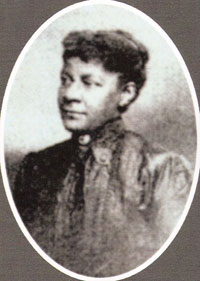
I've enjoyed celebrating Black History Month. To finish it out, here's a look at the accomplishments of Horace W. Bivins, plus more resources on Montana's black history.

Horace W. Bivins was born in Virginia of free ancestry and was college educated. He enlisted in the Tenth Cavalry, the famous Buffalo Soldiers, in 1887 as a noncommissioned officer. Bivins served in Arizona in campaigns against Geronimo. The Tenth Cavalry was reassigned to Fort Custer in Montana. There Bivins became famous as such an expert marksman that Buffalo Bill Cody tried to entice him to travel with his show. Bivins preferred the military. He was a veteran of two Cuban wars and three Philippine engagements. At the attack on San Juan Hill, he fought beside Teddy Roosevelt’s Rough Riders and later received the Silver Star for his heroic actions. Some years later when Roosevelt visited Billings, he was disappointed to learn that Bivins was not at home, but at Camp Dix, New Jersey, commanding a labor battalion.

Photo from BlackPast.org
Bivins retired in 1913 and reenlisted at personal hardship in 1918 during World War I, retiring a second time as captain in 1919. Bivins’s record for marksmanship stood until the 1970s, and today remains one of the all-time highest. During his thirty-two-year career in the military, Bivins received thirty-two medals, one for every year of service. Bivins studied taxidermy at the University of Minnesota, practiced that for a while, and did extensive truck gardening in the Billings area where he lived a long, quiet life.

From Montana Moments: History on the Go

P.S. Remember the accomplishments of another Buffalo Soldier?
P.P.S. Here are a few places to start your own research into our state's black history:
The Montana Historical Society has a lot of resources on African Americans in Montana.
Historian Ken Robison has shared much of his research on his blog, Historical Fort Benton.
Blackpast.org has information on African Americans in Montana and nationwide, including some primary source documents.
Listen to a series of oral history interviews from the Washington State University Libraries.
Read an interesting tidbit about jazz and CCC workers in Libby here.
If you or your library have access to JSTOR, start with this article from the Spring 2007 issue of Montana The Magazine of Western History.

And of course, you can always look back at all the Montana moments labeled black history.
I'd love to know what you turn up in your research. Leave a comment!

Monday, February 27, 2012

John W. White

Today's Montana moment celebrates Black History Month with a look back at the life of John W. White of Kalispell.

Kalispell’s historic Central School today is home to the Northwest Montana Historical Society and serves as a community center and museum. But from 1894 to 1991, Central served students. Back in 1932 during the Great Depression, students of social science and history were studying the Civil War. The school’s longtime janitor, John W. White, knew a thing or two firsthand about one of the main issues. White was born a slave in North Carolina. He was ten when the war ended and freedom changed his life. He came west where he and his wife, Helen, settled in Demersville. They moved to Kalispell with its founding in 1891. White worked at Central School for more than thirty-five years. He had no formal schooling, but he was a self-taught scholar, an avid reader, and believed in education. He began his long workday at four A.M., and at the end of every day when the halls were quiet, he would take up his place by the furnace with a book in his hand and do some serious reading.

Image from the Museum at Central School
White, beloved by generations of Central children, saved his money to send four of his own children to college. But this special day in May, 1932, as White neared the end of his long life, he set aside his mops and brooms to tell the children about his own personal experiences. White’s lectures on slavery that day had the children riveted to their seats. He passed away two years later in 1934, but he left Central students with a perspective they did not forget.

From Montana Moments: History on the Go

Friday, February 24, 2012

Friday Photo

Our last Friday photo celebrating Black History Month shows waiters from the Canyon Hotel in Yellowstone National Park in 1901.

Photo courtesy Montana Historical Society photograph archives, H-4873. Photo by Elliott W. Hunter. Used by permission.
It's technically a Wyoming moment, but I'm posting it anyway because it's a glimpse of the African American experience in the West. Also, it's a great photo. Speaking of great photos, if you have a picture (or story) of a Montana moment that you'd like to share, be sure to email me! I'd love to hear from you.

Wednesday, February 22, 2012

Sarah Bickford

In celebration of Black History Month, here's a look at a remarkable woman.

Virginia City businesswoman Sarah Bickford was born into slavery. Her parents were sold when she was very young, and she never saw them again. After the Civil War, Sarah went to live with an aunt in Tennessee. She came west at age fifteen in the employ of the John L. Murphy family. Judge Murphy served briefly as associate justice in the territorial Supreme Court at Virginia City. Sarah took take care of the Murphys’ children on the journey west. The Murphys soon returned to the states, but Sarah stayed, working as a chambermaid in a Virginia City hotel. She once found a poke of gold dust worth fifteen hundred dollars mistakenly left by a hotel guest. She tracked him down and returned it, and the miserly miner gave her a reward of twenty-five cents.

From From Slave to Water Magnate by Marlette C. Lacey
Sarah married a miner and had three children, but by the 1880s, her entire family had died. In 1881 Sarah married Stephen Bickford, a miner and owner of the Virginia City Water Company. With Stephen she had two girls and a boy who grew up listening to poignant stories about their mother’s first set of children. When Stephen died in 1900, Sarah took over the water company. She kept her office in Virginia City’s famous Hangman’s Building until her death in 1931. Sarah Bickford was one of the first women, and perhaps the only black woman in the nation, to own a utility.

From Montana Moments: History on the Go

P.S. Lots more research about Sarah Bickford at this blog, plus the Sarah Bickford house in Virginia City.
P.P.S. Remember this remarkable woman?

Monday, February 20, 2012

Placer Hotel

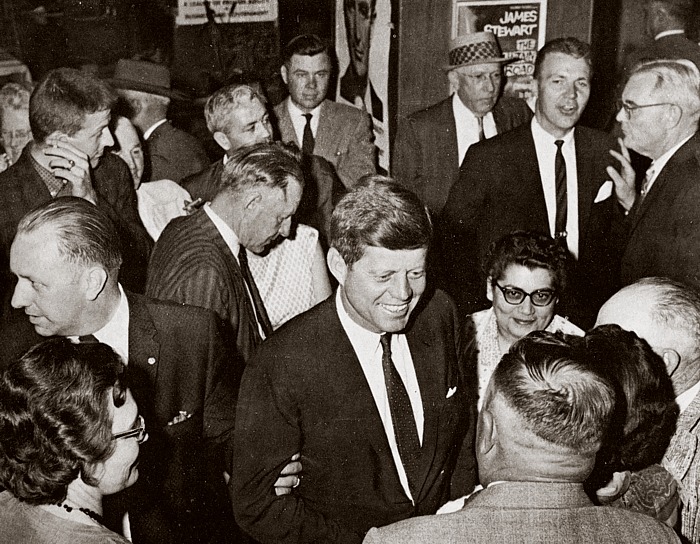
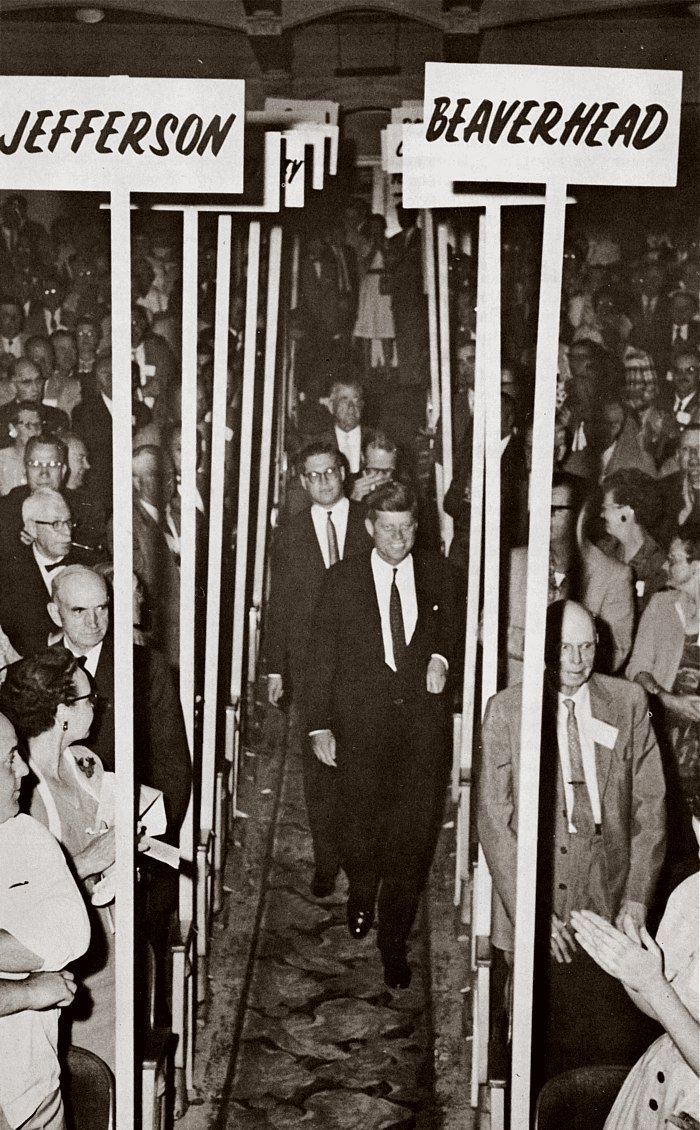
Artist C. M. Russell illustrated the program for the formal ball, held April 12, 1913, inaugurating the largest hotel between the Twin Cities and the Coast. Built almost entirely with donations as a public enterprise, Helena felt real pride of ownership, and the Placer Hotel quickly became the center of civic activity. Its name derives from the placer gold washed from the gravel during the excavation of its foundation. As the foundation was being dug, an oldtimer prospector was called in to demonstrate the art of panning. Soon he had a crowd fascinated with the lesson. Legend has it that in digging the basement, workers found enough gold to pay for the building and then some.  Architect George H. Carsley designed the grand hotel in consultation with Cass Gilbert, architect of New York’s famed Woolworth Building. The Placer’s wrought iron balconies, overhanging eaves, and wide cornice are reminiscent of the nearby Montana Club, designed by Gilbert in 1905. The seven-story hotel was constructed of reinforced concrete and brick from the Western Clay Manufacturing Company which is now the Archie Bray Foundation. Each of its 172 guest rooms, arranged around a U-shape, opened onto the outside. Custom-made china, cutlery, and bed linens—supplied by Helena’s New York Store—all bore the hotel’s prospector insignia. The hotel featured a carriage entrance, a lobby fireplace built to burn seven-foot logs, and a state-of-the-art kitchen with an automatic dishwasher and central refrigeration system. In June of 1960, a campaigning John F. Kennedy visited Helena during the Montana State Democratic Convention and stayed at the Placer as a guest. The former hotel is now divided into condominiums.

Kennedy mingled and spoke at the Marlow Theatre. Images from Helena As She Was

Friday, February 17, 2012

Friday Photo

In celebration of Black History Month, here's a glimpse of Montana's African American community in 1921.
Photo courtesy Montana Historical Society photograph archives, PAc96-25.2
The first convenetion of the Montana Federation of Negro Women's Clubs was held in Butte on August 3, 1921. Photo by Zubick Art Studio.

Wednesday, February 15, 2012

Samuel Lewis


In celebration of Black History Month, today's post looks at the accomplishments of Samuel Lewis...

Samuel Lewis settled in Bozeman in 1868, joining a small population of African Americans who came to Montana after the Civil War. Lewis, a native of the West Indies, was a skilled barber, an expert sleight-of-hand performer, and a first-class musician. He established a thriving tonsorial parlor and bathhouse on Main Street. Lewis shared his success with his younger sister, Edmonia, financing her studies abroad. Highly acclaimed as one of the most gifted African American sculptors of the nineteenth century, Edmonia displayed her work at the 1894 Chicago Exposition. In 1889, Lewis transformed his modest home into a fine Queen Anne style showplace that reveals a high level of architectural sophistication. Its grand and beautifully maintained interior features a frescoed parlor ceiling, tin ceiling in the kitchen, and ornate woodwork.

From History of Montana, 1739-1885
 Completed in 1890, the Lewis residence was then and is now one of Bozeman’s most delightful homes. When Lewis died in 1896, he left an estate valued at twenty-five thousand dollars. It was a well-deserved fortune likely unparalleled by other contemporary African American Montanans.

From Montana Moments: History on the Go

Tuesday, February 14, 2012

The “M”

Here's a special edition "Montana Moment" in celebration of Valentine's Day. Be sure to read to the end.

Ever wondered about letters on hillsides? Many Montana communities display these letters, often visible for miles on barren slopes. These familiar icons seem to be a product of the American West.  According to the experts, the University of California Berkeley boasts the first hillside letter, a giant “C” displayed in 1905. Other colleges and universities soon followed suit. As land grant colleges became established in western states newly admitted to the union, they joined the tradition. Montana has 112 hillside letters, more than any other state. Carroll College in Helena, Montana State University in Bozeman, Montana Tech in Butte, and the University of Montana Western in Dillon all display hillside letters. Other smaller schools and high schools also joined the trend. The University of Montana’s “M,” however, was the state’s first.

Image from Hotdogger Blog
Students constructed Missoula’s first “M” of whitewashed rock in 1909. Throughout the early decades, upperclassmen used the “M” to exert authority over the freshmen who were responsible for its upkeep. The sophomore class replaced the first “M” with an upright wooden model outfitted with $18 worth of lights. A larger wooden “M” soon replaced the upright one, but students did not properly attach the pieces and a blizzard carried them off. Forestry students built the trail leading up to the “M” in 1915. It has since served university and community groups who have used the “M” to advertise events or causes, and it has seen demonstrations and pranks. And once, with the addition of giant letters, a creative suitor even spelled out the message, “MARRY ME!” If the offer was accepted, it is not on record.

Monday, February 13, 2012

Brother Van’s Love Story

Here's a love story to tug your heartstrings.

Montana’s famous itinerant Methodist minister, William Wesley Van Orsdel, known to most as “Brother Van,” never married. And this is the story of why that was. As Brother Van traveled across Montana territory in the 1870s, he stopped at the sheep ranch of Richard Reynolds in the Beaverhead valley. The family invited him to stay, and there he met Reynolds’ stepdaughter, 13-year-old Jennie Johnston. She and Brother Van became fast friends. When Jennie turned 18, Brother Van was 31. Jennie’s mother wanted her to go to college, and so in September, 1879, she and brother Van postponed their plans and Jennie headed off for Northwest University in Evanston, Illinois. But Jennie became ill with tuberculosis. In the summer of 1880, she returned home to Montana. The next February, 1881, Jennie caught the measles but recovered and helped nurse other family members through what was then a very dangerous illness. But by summer, 1881, Jennie’s health began to fail and she died in October. As she lay in state in the Reynolds’ parlor, Brother Van slipped the wedding ring he would have given her onto her finger. He wore the ring she would have given him for the rest of his life. Jennie, whose mother was a Poindexter, was buried in the Poindexter family cemetery that today is in a cow pasture. Jennie’s grave was moved to Mountain View Cemetery northeast of Dillon and is marked with only a small nameplate. Brother Van lived a long, full, useful life and died in 1919. He is buried in Helena, far from his beloved Jennie.
 
Brother Van (with hand inside his coat) officiated at many weddings around the state, including Helena newspaperman Charles Greenfield's marriage to Elizabeth Nelson in 1913, probably in her home in Vandalia, northwest of Glasgow. But Brother Van himself never married. Photo from I Do: A Cultural History of Montana Weddings by Martha Kohl. Original in Montana Historical Society photograph archives, Helena, 942-477


Friday, February 10, 2012

Friday Photo

In celebration of Black History Month, here's a look back at one of the contributions of blacks in the military stationed in Montana. Tomorrow I’ll be giving a talk, “Vignettes of Valor,” profiling some more of those contributions. It's here at the Historical Society at 2:00. Hope you can make it!
 
From Montana Views. Original in Montana Historical Society Photograph Archives, H-3614. Used by permission.
A group of bicyclists stands on Minerva Terrace in Yellowstone National Park in August 1896. The men belong to Lt. James A. Moss's company of the Twenty-fifth Infantry, U.S. Army Bicycle Corps, Fort Missoula, Montana. Photo by F. Jay Haynes.

P.S. It's possible that one of the men pictured is Mingo Sanders.
Update: Thanks to Mike Higgins for identifying the men in this photo. See his comment below for their names.

Monday, February 6, 2012

Mingo Sanders

Good morning history buffs! What are you up to this week? I’ll be giving a talk, “Vignettes of Valor,” profiling some of the contributions of blacks in the military stationed in Montana or with Montana connections. It will be here at MHS on Saturday, 2:00 PM, in celebration of Black History Month. This is the little-known story of Mingo Sanders,  one of these courageous men.

African American buffalo soldiers of the Twenty-fifth Infantry arrived at Fort Missoula in May of 1888. Some of these men participated in the famous bicycle experiment, riding 1,900 miles from Missoula to St. Louis in the summer of 1897. One of the key riders was Mingo Sanders, a 16-year army veteran.

From The Brownsville Raid by John D. Weaver.
Mingo Sanders (center, in uniform) with his baseball team at Fort Missoula.

Although partially blind from an explosion, Sanders had an excellent service record and the respect of his commanding officers. In 1898, the Twenty-fifth was ordered to Cuba at the start of the Spanish American War. Sanders and the Twenty-fifth distinguished themselves fighting alongside Teddy Roosevelt and his Rough Riders at the Battle of San Juan Hill. Today historians credit the buffalo soldiers with saving the Rough Riders, who instead got all the press and praise, and Roosevelt, who got himself elected president. Sanders then served in the Philippine Insurrection and received the Medal of Honor for his heroic actions. In 1906, Sanders, stationed at Fort Brown, Texas, was a year away from his retirement and well-deserved pension. He and 166 others of the Twenty-fifth Infantry, many of them fellow members of the famous bicycle corps, were falsely accused of murdering a white bartender. Fabricated evidence and President Roosevelt’s political agenda led to their dishonorable discharge without a trial. The incident was known as the “Brownsville Affair.” Mingo Sanders, blind in one eye and diabetic, gave most of his life to his country, but never received his pension. He died in 1929 during the amputation of a gangrenous foot. Decades later in 1972, Congress reopened the case and found all 167 men innocent. They received honorable discharges posthumously and each received $25,000 in restitution, paid to their heirs.

Harper's Weekly, January 12, 1907
Sanders upon hearing the verdict.

Friday, February 3, 2012

Friday Photo

It's Super Bowl weekend, and that means big doin's for football fans. Here's a look back at a bit of Montana's own football history.

Original in Montana Historical Society Photograph Archives, 948-415. Used by permission.

The Havre girls' football team poses with their coach in 1924. Brainerd, photographer.

Wednesday, February 1, 2012

Children in the Mining Camps

Children who spent time in the mining camps of Montana faced numerous dangers. Typhoid and cholera plagued mining camps because miners quickly polluted the water source. But measles, whooping cough and diphtheria also invaded the communities. In 1889, diphtheria in the great silver camp of Elkhorn, for example, claimed almost all the children, including the Roberts sisters whose poignant tombstone tells the tragic tale.


During that same year, Harry Walton, 9, and Albin Nelson, 10, somehow escaped diphtheria, but they found a quicksilver container full of black powder. Adults filled these containers to detonate for community celebrations like the Fourth of July, and had overlooked this one. The boys managed to explode it and blew themselves to bits. They share a grave in the small cemetery. Mining-related accidents, mine shafts, and explosives posed real dangers. But of all the mining camps, the huge metropolitan industrial hub of Butte was probably the most dangerous place for youngsters. Growing up in Butte made children tough and unusually daring. They seemed to thrive in the polluted air and unsanitary conditions frequently noted in reports to the Board of Health. One Butte native who grew up there in the 1930s and 1940s recalled that mine officials came around to his elementary school and showed the kids what a blasting cap was, warned them not to pick them up, and showed them the explosive inside. After the lecture, every boy went out in search of caps. They poured the powder into a bottle with a wick, put it on the train tracks, preferably on a trestle, and hoped it would explode as a train passed by. Children lost limbs to this form of play, but danger made the game that much more fun.